Introduction
Listening often begins before interpretation. Walking through Avenida Juárez in Ciudad Juárez, México— a sister city to El Paso, Texas—a vendor’s voice rises above traffic and pedestrian movement, calling out, “¡Tacos, tacos, tacos, pásele!” Nearby, another voice offers, “Te traigo un manguito,” while elsewhere a migrant speaker reflects softly, “Cualquier bendición que le sale a tu corazón es buena.”These sonic encounters do more than fill public space. They organize movement, reveal cultural intimacy, and transmit lived experiences that rarely appear within dominant textual or visual archives.
Border Soundscapes emerged from the recognition that listening can function as both a rhetorical and ethical practice within digital humanities research. As Selfe notes, multimodal theory understands the aural as “one modality among many… as a rhetorical and creative resource in composing messages and making meaning” (638), reminding us that no single modality can carry the full range of meaning in a text (639). Similarly, Ceraso frames sonic composing as an embodied practice grounded in bodily learning and the cultivation of multimodal listening. By composing place-based sound archives and sound maps, this project explores how sonic multimodality documents memory, spatial narratives, and community presence across cultural and linguistic difference (Powell). Rather than treating sound as supplementary media, Border Soundscapes approaches listening as a human-centered praxis that foregrounds embodied and relational forms of knowledge grounded in lived experience (Ceraso; Costanza-Chock).
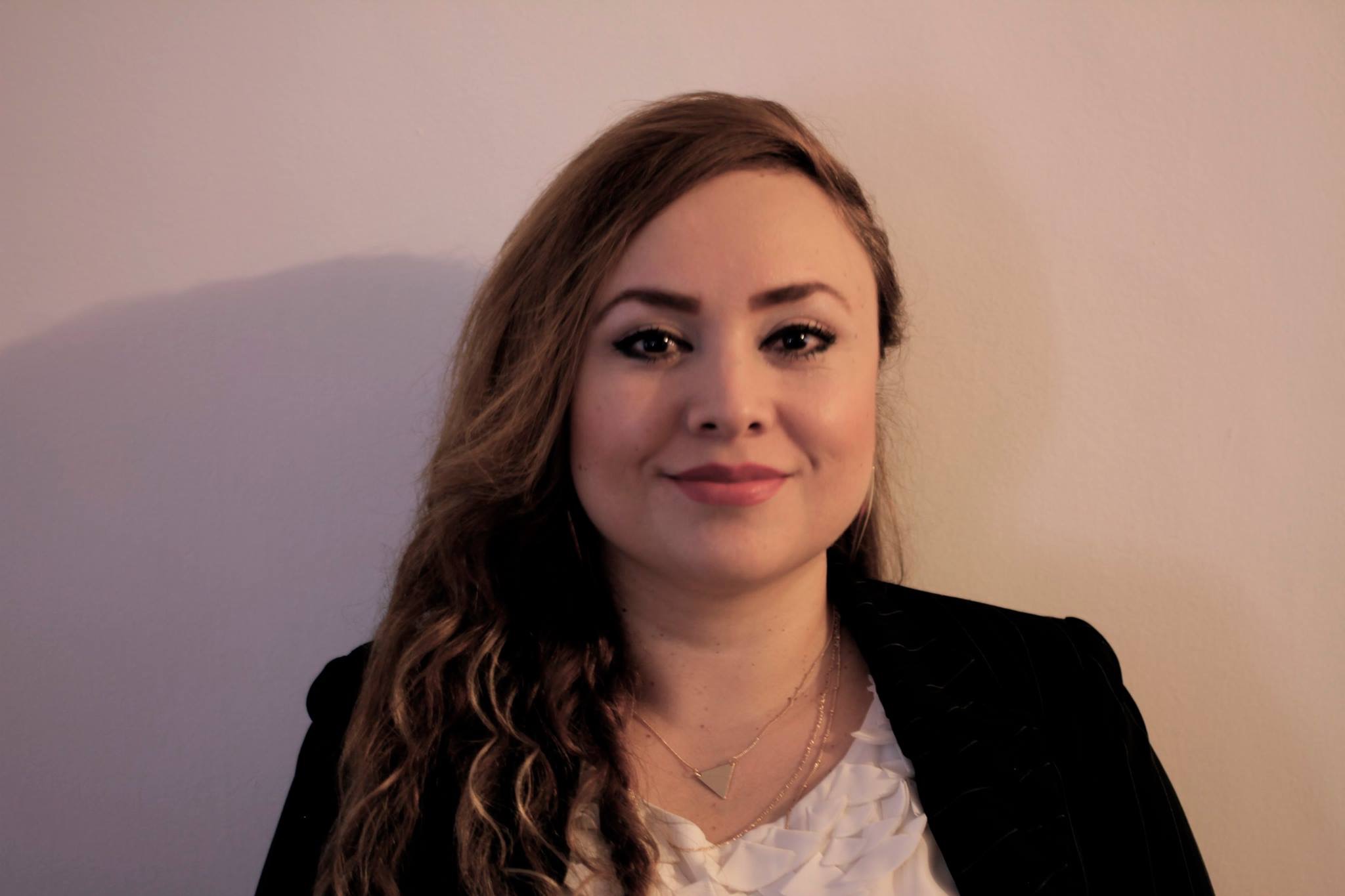
A recent development in the project is the formal incorporation of collaborative authorship through Elizabeth Escobedo. Through her daily commute between Ciudad Juárez and El Paso, Elizabeth occupies a unique position as both participant and listener within the border’s acoustic landscape. Her repeated crossings reveal how routine mobility produces distinct sonic rhythms shaped by checkpoint pauses, shifting languages, traffic patterns, and subtle transitions between binational sound environments. Reflecting on these experiences, Elizabeth describes walking and listening as a multisensory practice in which “each of the sounds, rhythms, voices… creates a unique composition,” transforming the path into what she calls “a sonic book” written through movement and memory. For her, listening is not passive but “an active rhetorical event,” one that shapes both listener and environment. Her perspective illustrates how sonic knowledge emerges through embodied movement, situated listening, and shared experience.
Why Sound Matters in Digital Humanities
Digital humanities scholarship has long emphasized transforming archives, texts, and visual media through computational and multimodal design (Yancey; Selfe and Selfe). Yet sound remains comparatively underrepresented, even though sonic environments can be understood as multimodal rhetorical texts that both communicate meaning and exceed alphabetic and visual representation. As scholars across linguistics, semiotics, and sound studies have long suggested (Saussure; Barthes; Chion; Mitchell), the boundaries between text, image, and sound are neither fixed nor discrete, but socially constructed and interdependent. Building on this tradition, Mitchell’s concept of imagetext emphasizes that all media operate as hybrid or “mixed” forms that combine sensory and semiotic elements rather than existing as purely visual or textual modes. Framing border soundscapes as texts in this sense challenges alphabetic-centered definitions of academic knowledge by positioning listening, recording, and sonic composition as legitimate forms of inquiry rather than as secondary supplements to written analysis.
Listening reveals rhythm, proximity, affect, and spatial orientation—qualities that structure how environments are lived but often disappear in conventional documentation. For Ceraso, this gap underscores the importance of cultivating perception through multimodal listening practices attentive to bodies, environments, and sensory interaction (103).
Sound functions not only as sensory data but as relational knowledge. Everyday sonic events—street calls, conversations, traffic, or ceremonial rhythms—encode cultural practices and social interaction. Because sound unfolds in time and space, it preserves movement and embodied presence, offering a way to document lived experience as process rather than static record. Sonic archives thus extend digital humanities by foregrounding listening as both method and ethical stance, prioritizing context and situated experience (Gries). For Border Soundscapes, sound becomes a medium through which mobility, crossings, and everyday routines are documented as lived realities. More than a passive element, sound functions as both a method and an active agent, capable of articulating meaning about an environment and situated moments in time and space.
Project in Action: Sonic Methodology
Border Soundscapes approaches sonic documentation as an iterative and collaborative process grounded in situated listening and everyday mobility (Costanza-Chock; Walton, Moore, and Jones). Field recording is treated as a compositional act rather than a neutral capture of sound. Following Selfe’s argument that composing is materially situated within bodies and environments, and drawing on Ceraso’s work on embodied listening, recordings prioritize ordinary moments—street exchanges, transit rhythms, market activity, checkpoint pauses, and gatherings where social life becomes acoustically legible.
Recordings are selected not only for clarity but for their capacity to reveal spatial transition, cultural interaction, and lived experience. Routine crossings produce recurring sonic textures: traffic compressing near inspection points, alternating languages across conversations, or subtle shifts in ambient sound between urban zones. These patterns document the border not as a fixed line but as a temporal and acoustic process. Collaborative listening sessions further shape how recordings are interpreted, curated, and mapped, transforming the archive into a dynamic environment emphasizing relational knowledge rather than static storage.
Ethical Listening and Social Justice
Documenting sound also requires reflecting on the ethics of listening. Recordings mediate relationships between listeners, participants, and communities; they do not simply represent places. Border Soundscapes, therefore, approaches sonic documentation as an ethical practice grounded in contextual awareness, respect for participants, and social responsibility (Jones; Poe, and Inoue). Listening becomes a responsibility rather than a neutral technical act.
Many recordings capture everyday exchanges, migrant reflections, informal commerce, and community rituals—moments that public discourse often abstracts into generalized narratives or statistics (Banks). Preserving ambient noise, pauses, and spatial texture resists isolating voices as abstract testimony, instead foregrounding presence and relational complexity. Through collaborative interpretation and careful presentation, listening can function as a form of social engagement that recognizes everyday sonic experience as legitimate cultural knowledge (Walton, Moore, and Jones; Costanza-Chock).
Pedagogical Implications
These collaborative and ethical listening practices extend directly into pedagogy. Sonic multimodality allows students to engage research beyond purely textual analysis (Shipka; Takayoshi, and Selfe). As Ceraso notes, contemporary sound environments can train listeners to rely primarily on their ears, making them “less sensitive to the fuller sensory experience of sound or how the rest of the body experiences and engages with sound” (40). This highlights the importance of cultivating embodied listening practices that reconnect perception to bodily awareness and environmental context. Likewise, Selfe argues that privileging writing over other modalities has “limited our understanding of composing as a multimodal rhetorical activity” and deprived students of valuable semiotic resources (616).
Through sonic composition, students learn to attend to tone, rhythm, environment, and presence. Recording environments, reflecting on soundscapes, and composing multimodal projects help them understand how places communicate through acoustic interaction. This work supports multiliteracies while fostering ethical awareness about representation and context (Selfe and Selfe; Kleinfeld). Importantly, it models research as participatory and community-centered rather than extractive (Costanza-Chock; Walton, Moore, and Jones). In practice, this means approaching sonic documentation with careful attention to consent, context, and representation, particularly when engaging with vulnerable populations such as migrant communities. Rather than extracting voices as isolated testimony, recordings are situated within their environments and interpreted through collaborative and reflexive listening practices that consider how and under what conditions voices emerge and are heard. In pedagogical contexts, assignments such as Listening for Justice invite students to engage sound not as neutral data but as a form of social evidence, encouraging them to reflect on how listening intersects with power, inequality, and responsibility. Through this approach, students learn to treat sound not only as a medium of expression, but as an ethical practice of attention and care.
Sound as Relational Knowledge
By centering listening as both method and practice, Border Soundscapes demonstrates how sonic multimodality expands digital humanities beyond textual and visual representation toward embodied and relational knowledge (Selfe; Ceraso; Gries). Across street exchanges, crossings, and communal rhythms, sound reveals how places are lived rather than merely mapped. Listening thus becomes more than a research tool: it becomes a human-centered practice connecting environments, experiences, and communities across borders.
Works Cited
Banks, Adam J. Race, Rhetoric, and Technology: Searching for Higher Ground. Routledge, 2006.
Barthes, Roland. Image-Music-Text. Translated by Stephen Heath, Hill and Wang, 1977.
Cedillo, Christina V. “What Does It Mean to Move?: Race, Disability, and Critical Embodiment Pedagogy.” Composition Forum, no. 39, 2018.
Ceraso, Stephanie. “(Re)educating the Senses: Multimodal Listening, Bodily Learning, and the Composition of Sonic Experiences.” College English, vol. 77, no. 2, 2014, pp. 102–123.
Ceraso, Stephanie. Sounding Composition: Multimodal Pedagogies for Embodied Listening. University of Pittsburgh Press, 2018.
Chion, Michel. Audio-Vision: Sound on Screen. Edited and translated by Claudia Gorbman, Columbia University Press, 1994.
Costanza-Chock, Sasha. Design Justice: Community-Led Practices to Build the Worlds We Need. MIT Press, 2020.
Gries, Laurie E. Still Life with Rhetoric: A New Materialist Approach for Visual Rhetorics. Utah State University Press, 2015.
Jones, Natasha N. “The Technical Communicator as Advocate: Integrating a Social Justice Approach in Technical Communication.” Journal of Technical Writing and Communication, vol. 46, no. 3, 2016, pp. 342–361.
Kleinfeld, Elizabeth. “Reimagining Multimodality through UDL.” Bridging the Multimodal Gap: From Theory to Practice, edited by Sushil K. Khadka and J. C. Lee, University Press of Colorado, 2019, pp. 30–42.
Mitchell, W. J. T. Picture Theory: Essays on Verbal and Visual Representation. University of Chicago Press, 1994.
Poe, Mya, and Asao B. Inoue. “Toward Writing as Social Justice: An Idea Whose Time Has Come.” College English, vol. 79, no. 2, 2016, pp. 106–118.
Powell, Katrina M. “Locations and Writing: Place-Based Pedagogy and the Writing Classroom.” College Composition and Communication, vol. 66, no. 1, 2014, pp. 90–112.
Saussure, Ferdinand de. Course in General Linguistics. Edited by Charles Bally and Albert Sechehaye, translated by Wade Baskin, McGraw-Hill, 1966.
Selfe, Cynthia L. “The Movement of Air, the Breath of Meaning: Aurality and Multimodal Composing.” College Composition and Communication, vol. 60, no. 4, 2009, pp. 616–663.
Selfe, Cynthia L., and Richard J. Selfe. “Convince Me! Valuing Multimodal Literacies and Composing Public Service Announcements.” Theory Into Practice, vol. 47, no. 2, 2008, pp. 83–92.
Shipka, Jody. Toward a Composition Made Whole. University of Pittsburgh Press, 2011.
Takayoshi, Pamela, and Cynthia L. Selfe. “Thinking about Multimodality.” Multimodal Composition: Resources for Teachers, edited by Pamela Takayoshi and Cynthia L. Selfe, Hampton Press, 2007, pp. 1–12.
Trimbur, John. “Composition and the Circulation of Writing.” College Composition and Communication, vol. 52, no. 2, 2000, pp. 188–219.
Walton, Rebecca, Kristen Moore, and Natasha Jones. Technical Communication after the Social Justice Turn: Building Coalitions for Action. Routledge, 2019.
Yancey, Kathleen Blake. “Made Not Only in Words: Composition in a New Key.” College Composition and Communication, vol. 56, no. 2, 2004, pp. 297–328.