
As we begin one academic year and look back at the last, the DRC Fellows share their reflections on their projects, collaborations, and takeaways from the Fellowship. It was wonderful to work with each of the Fellows this year, and to see the ways in which connections with DRC advisory board members, directors, and other fellows developed. Additionally, all of the fellows co-presented at Computers and Writing this year and interviewed the past and current editors of Computers and Composition. We wish the Fellows the best on the next part of their journey and appreciate all their contributions! Thais Rodrigues…
Author: Ali Alalem
Ali Alalem, Thais Rodrigues Cons, Nicole K. Golden, Erin Miller, Mehdi Mohammadi, Funmilola Fadairo
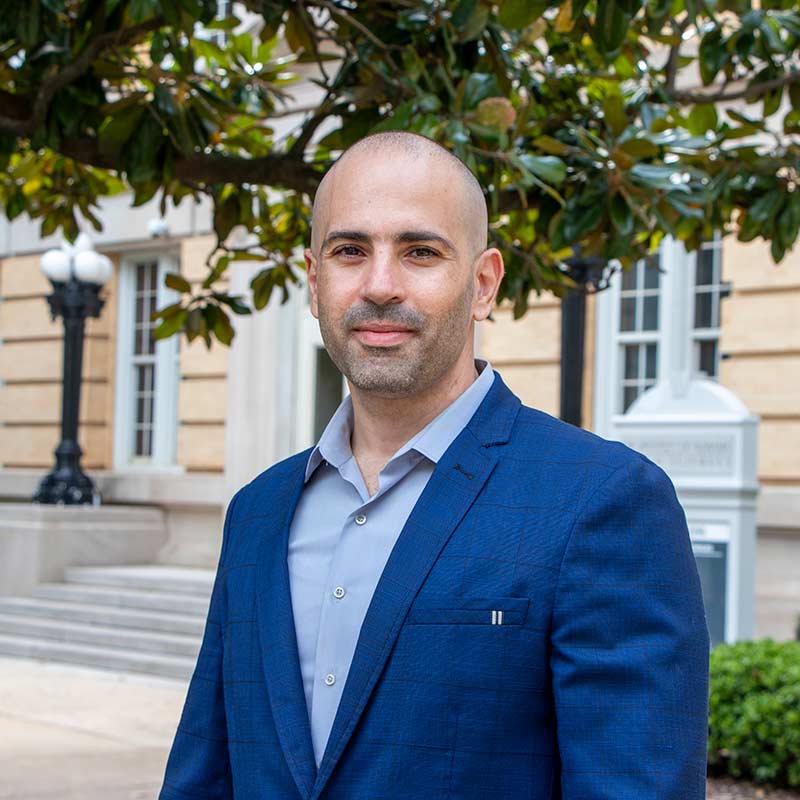
Ali Alalem is a PhD Candidate in Composition and Rhetoric at The University of Alabama. His research explores multimodal composition as a transformative pedagogy.
The audio you have just listened to (see above) is only a short excerpt from a collaborative podcast created by a group of students in an upper-level Writing Across Media course at The University of Alabama. In this context, we define collaborative podcasting as a process in which more than two students co-plan and co-create an audio composition in which they engage in meaningful conversation on a topic of mutual interest intended for a real audience. For this collaborative effort to serve social justice, we argue that it should invite students to draw on their own lived experiences and share…
Our Blog Carnival 24 comes at a time when the learning and well-being of many students are impacted by the enforcement of anti-DEI policies and growing restrictions on how educators, tutors, administrators, leaders, and directors can attend to the varied ways students learn, belong, and thrive within a globalized, multicultural, inclusive, and habitable world. While grappling with these challenges, GenAI technologies have emerged simultaneously as an uncontainable disruptive force, leaving many of us wondering whether to refuse them or to engage with them critically and thoughtfully. Against this backdrop, the contributions we have published demonstrate that our valued authors have…
Welcome to Part II of Blog Carnival 24: Multimodality, Social Justice, and Human-Centered Praxis. As we continue to amplify the amazing justice-oriented work instructors and practitioners are doing across our field, this second group of posts broadens our scope. While authors continue to explore innovative approaches in First-Year Composition, Part II expands into Technical and Professional Communication (TPC), digital rhetoric, content creation, and diverse Writing Program Administration roles, including Writing Center and training faculty across the disciplines. The nine posts featured here demonstrate how multimodality acts as a powerful intervention not just in our assignments, but in the ways we…