
As we begin one academic year and look back at the last, the DRC Fellows share their reflections on their projects, collaborations, and takeaways from the Fellowship. It was wonderful to work with each of the Fellows this year, and to see the ways in which connections with DRC advisory board members, directors, and other fellows developed. Additionally, all of the fellows co-presented at Computers and Writing this year and interviewed the past and current editors of Computers and Composition. We wish the Fellows the best on the next part of their journey and appreciate all their contributions! Thais Rodrigues…
Author: Nicole K. Golden
Ali Alalem, Thais Rodrigues Cons, Nicole K. Golden, Erin Miller, Mehdi Mohammadi, Funmilola Fadairo
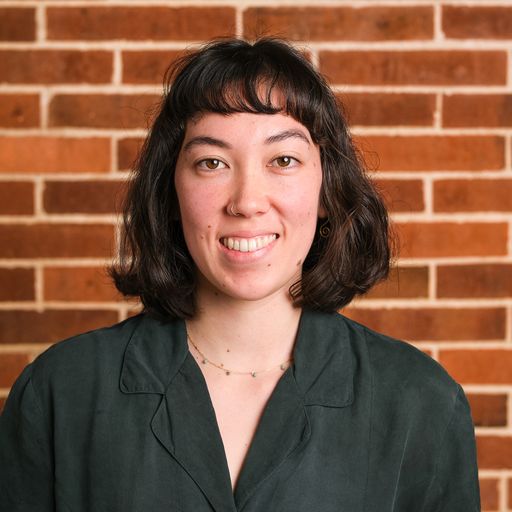
Nicole Koyuki Golden (she/her) is a PhD candidate in Rhetoric, Writing, and Cultures at Michigan State University. Her research interests include technical communication, digital and cultural rhetorics, and Asian/American communities.
The audio you have just listened to (see above) is only a short excerpt from a collaborative podcast created by a group of students in an upper-level Writing Across Media course at The University of Alabama. In this context, we define collaborative podcasting as a process in which more than two students co-plan and co-create an audio composition in which they engage in meaningful conversation on a topic of mutual interest intended for a real audience. For this collaborative effort to serve social justice, we argue that it should invite students to draw on their own lived experiences and share…
In our call for submissions, we asked educators from across the disciplines to share teaching materials that forward social justice pedagogies. While our understanding of social justice is grounded in the field of Technical and Professional Communication’s ongoing social justice turn toward actionable and coalitional justice, we invited contributors to briefly discuss how their course materials enact socially just pedagogies as they understand them across contexts such as writing studies, composition, writing center studies, rhetoric writ large, and still others. Their unique course syllabi and activities join a chorus of existing materials within both the Sweetland Digital Rhetoric Collaborative (DRC)…
Presenter: Kalpana Shrestha (East Carolina University, PhD Student) Content warning: The presentation discussed in this review focuses on the Global South’s anti-rape movement. Rape is referred to strictly in name only in this piece and is not discussed to any other extent. Each year I’ve gone to CCCCs, I’m there for sessions about Asian Pacific Islander Desi American (APIDA) communities or by APIDA-identifying scholars. As a Japanese American who studies APIDA communities, I find CCCCs and the Asian/Asian American Caucus to serve an important role in my professional development and sense of belonging in the fields of rhetoric and technical…