My interest in multimodal communication and digital technologies grew out of my experiences navigating complex multilingual and multimodal environments in Ghana. Growing up, I shuttle between multiple languages, digital and multimodal modes to communicate with people in different social and cultural contexts. From an early age, I was surrounded by different ways of telling stories, sharing knowledge and making meaning through languages, images, sounds, and multiple communicative resources. These experiences taught me that communication is always more than words and it involves multiple modes such as images, sounds, and the relationships we build with our audience.
This interest deepened through my experience as a sports journalist and broadcaster. In Ghana, I worked at Atlantic Broadcasting Services at University of Cape Coast, where I served as a sports news presenter and executive producer of Sports program. I wrote and reported sports news stories and covered major sporting events including the 2018 Women’ s African cup of Nations in Cape Coast as a correspondent for Radio Fafa. These experiences showed me how media content is researched, produced, and adapted for different audiences and platforms. They also sparked my interest in how digital technologies are changing the ways sport stories are told and how communities engage with them across social media and other digital platforms.
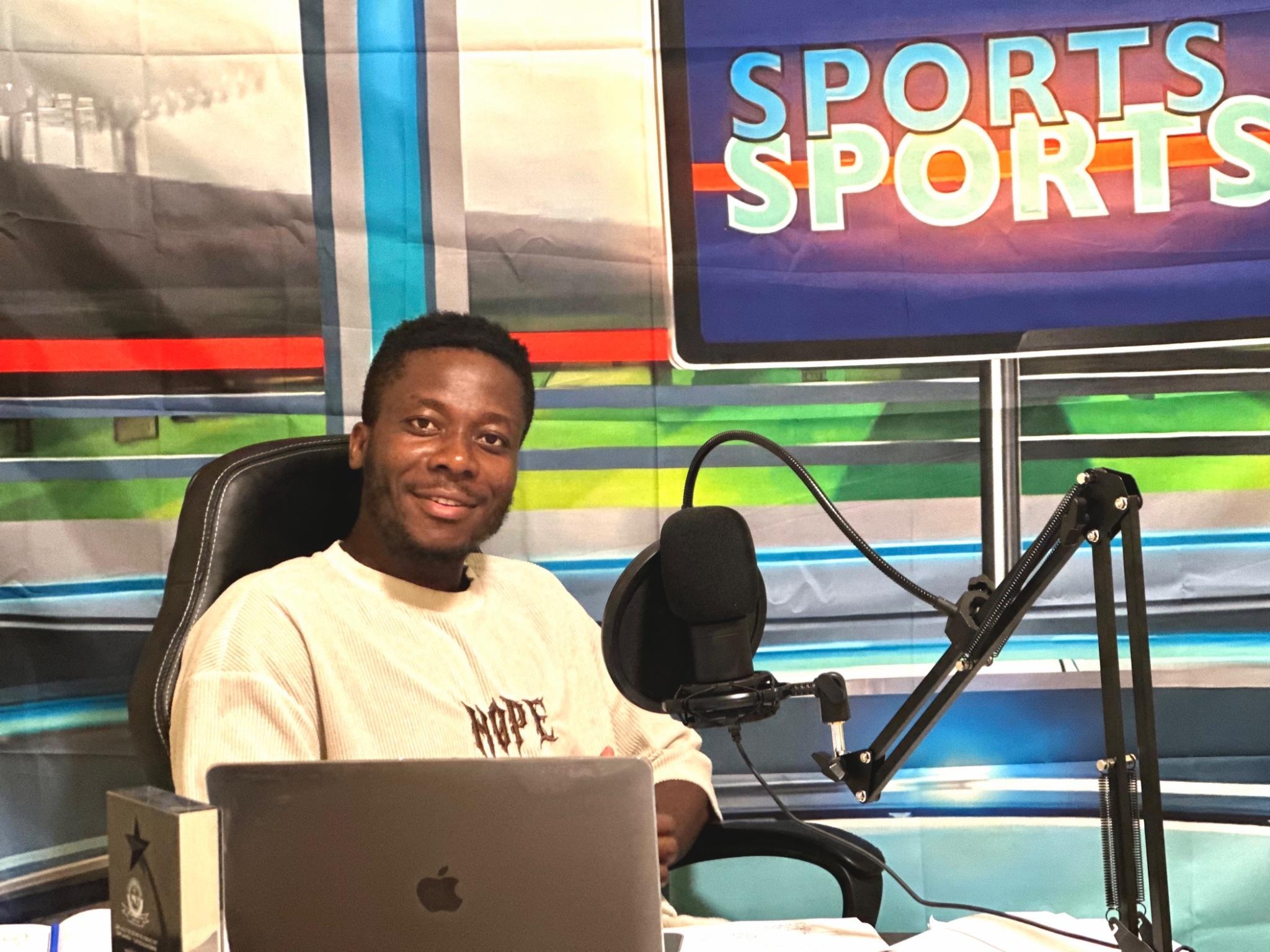
My experience as a sports journalist continues to inform my interest in storytelling, audience engagement and multimodal communication. This photograph captures my continued engagement with studio-based communication where I draw on sounds, visuals, text, gestures to communicate sports news for a diverse audience.
My interest in multimodal communication also shapes my teaching. At Virginia Tech, I teach first-year writing courses that encourage students to recognize and use diverse multiple modes and resources available to them. I invite students to explore how ideas move across multiple modes and media through multimodal composing processes. One classroom activity I enjoy invites students to draw their composing processes and reflect on how their ideas develop across different activities, places, people, and resources. I encourage students to visualize how they generate their ideas, use digital technologies, and make decisions throughout their composing processes.
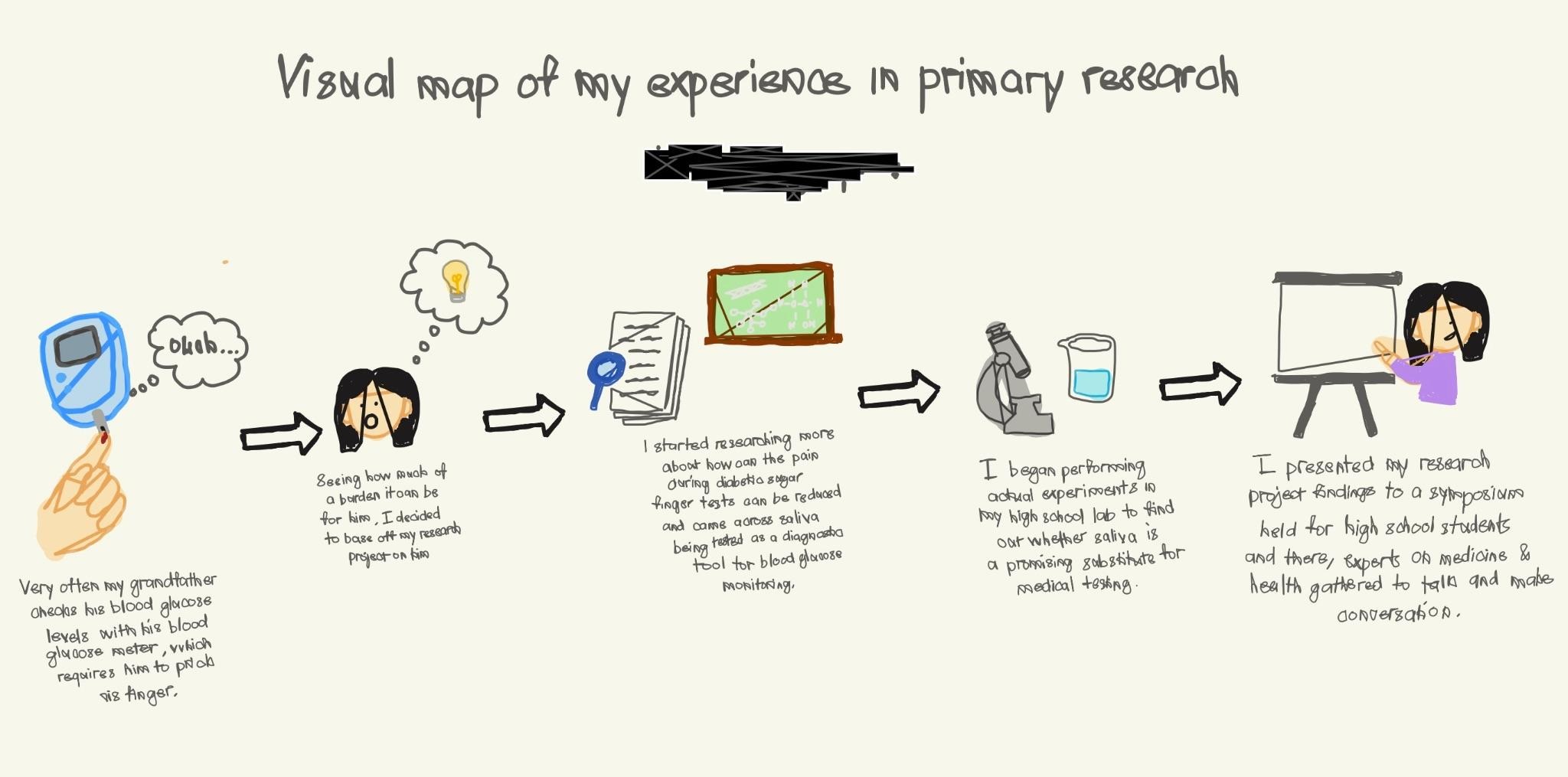
One student’s digital drawing illustrates the possibilities of this activity. Through her handwritten explanation, arrows, drawings and visual symbols, she maps out how her experience with her grandfather’s blood-glucose monitoring informed her research interest. What interests me about her drawing is how she brings together visual and linguistic resources to represent a process that might be difficult to communicate through a conventional textual reflection. Experience like this reminds me that multimodal composing creates opportunities for students to reflect on how they develop, organize, and communicate their research more meaningfully for the audience.
Beyond writing in the classroom, I am also deeply interested in how digital technologies enable communities to challenge dominant narratives and participate in public conversations about issues that affect their lives. My research on environmental activism in Ghana examines how activists use digital platforms, chants, music, images, videos, and hashtags to communicate environmental impacts of illegal mining locally known as ‘galamsey’ in Ghana. At the 2026 Council of Programs in Technical and Scientific communication conference in Boise, Idaho, I presented this research to show how multimodal practices of activists help document environmental damage and crises to local and geographically dispersed audience.
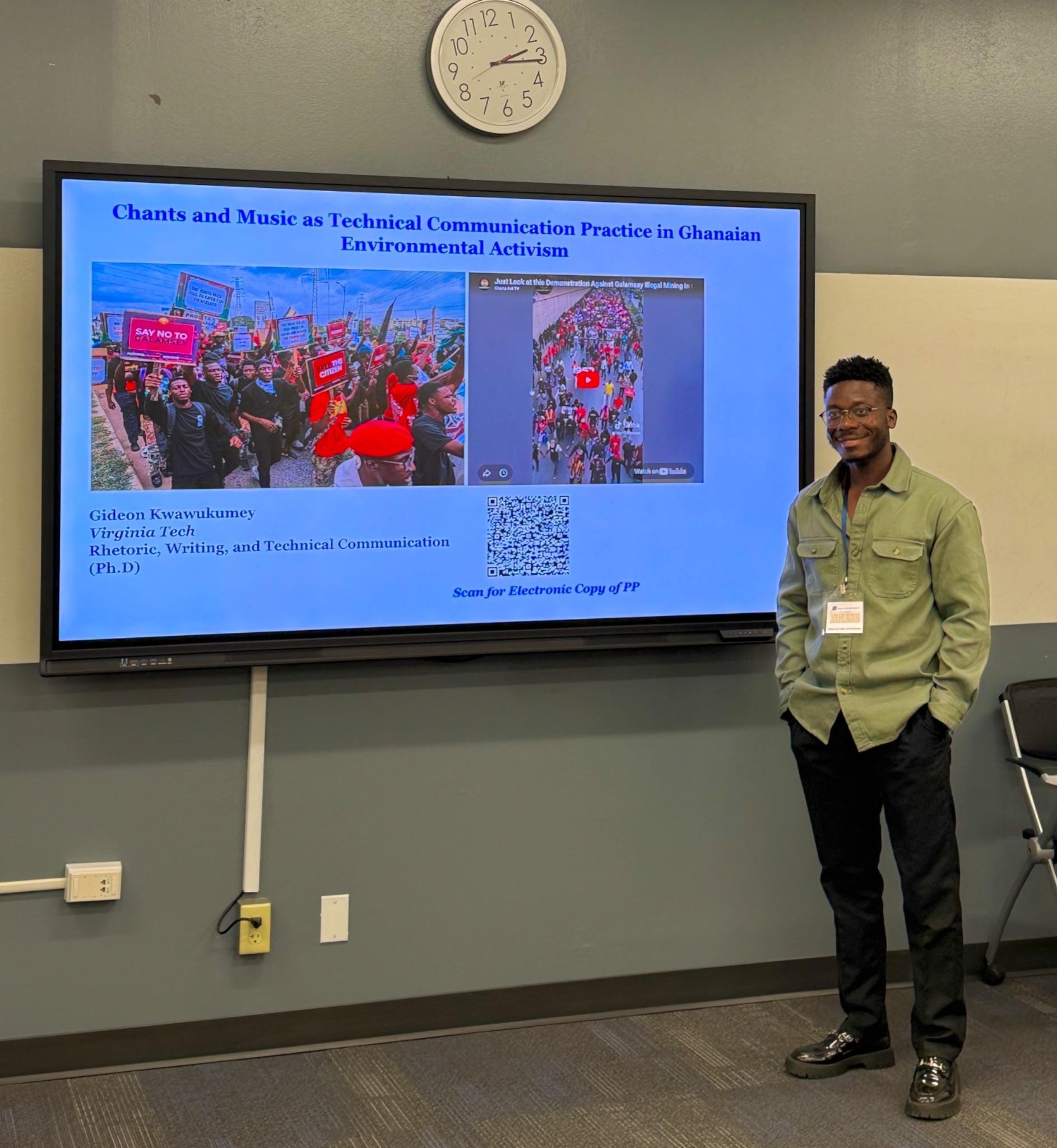
My commitment to multimodal communication, environmental rhetoric and transnational technical communication has also received recognition through scholarly awards. In 2026, I received the CPTSC Diversity scholarship and ATTW Amplification Award both of which supported my work on multimodal environmental rhetoric and transnational technical communication and encourage me to center technical communication practices of non-western communities whose environmental knowledge has been overlooked in the field in TPC.
As a DRC fellow, I am excited to be part of a community of scholars who are reimagining the possibilities of digital rhetoric, multimodal composing, and transnational technical communication research. I look forward to learning from and collaborating with other fellow scholars and contributing to conversation about multimodality, environmental rhetoric, and ways digital technologies are used by localized communities to communicate environmental knowledge and ecological care. I am particularly interested in exploring how multi-marginalized perspectives from the Global South can expand our understanding of digital rhetorical practices.
Please can you reach me via gkkwawu@vt.edu. Akpekaka! Thank you all!