
Close Menu
    Facebook X (Twitter) Instagram
    Recent Posts
    • Reintroduction to Funmilola Fadairo
    • DRC Fellows End of Year Reflection
    • Toward a Post-Temporal Time-Consciousness in GenAI-Mediated Writing
    • Flock vs. DeFlock: The Constitutive Limits of Community
    • “I Am a Living UNESCO Site”: When AI Flattens Culture with Dr. Cana Itchuaqiyaq
    • A Battle of Narratives: Community Resistance to the Material Costs of AI with Dr. Dustin Edwards
    • Collaborative Podcasting for Social Justice in Composition Classrooms
    • 2026 C&W Session Review: Session G: Sustaining Programmatic Assessment: The Role of Digital Praxis and Reflection
    RSS Facebook X (Twitter) Instagram
    Digital Rhetoric Collaborative
    • Home
    • Conversations
      • Blog Carnivals
      • DRC Talk Series
      • Hack & Yack
      • DRC Wiki
    • Reviews
      • CCCC Reviews
        • 2026 CCCC Reviews
        • 2023 CCCC Reviews
        • 2022 CCCC Reviews
        • 2021 CCCC Reviews
        • 2019 CCCC Reviews
      • C&W Reviews
        • 2025 C&W Reviews
        • 2022 C&W Reviews
        • 2019 C&W Reviews
        • 2018 C&W Reviews
        • 2017 C&W Reviews
        • 2016 C&W Reviews
        • 2015 C&W Reviews
        • 2014 C&W Reviews
        • 2013 C&W Reviews
        • 2012 C&W Reviews
      • MLA Reviews
        • 2019 MLA Reviews
        • 2014 MLA Reviews
        • 2013 MLA Reviews
      • Other Reviews
        • 2018 Watson Reviews
        • 2017 Feminisms & Rhetorics
        • 2017 GPACW
        • 2016 Watson Reviews
        • 2015 IDRS Reviews
      • Webtext of the Month
    • Teaching Materials
      • Syllabus Repository
      • Teaching & Learning Materials (TLM) Collection
    • Books
      • On Visual Rhetoric
      • Memetic Rhetorics
      • Beyond the Makerspace
      • Video Scholarship and Screen Composing
      • 100 Years of New Media Pedagogy
      • Writing Workflows
      • Rhetorical Code Studies
      • Developing Writers in Higher Education
      • Sites of Translation
      • Rhizcomics
      • Making Space
      • Digital Samaritans
      • DRC Book Prize
      • Submit a Book Proposal
    • DRC Fellow Projects
    • About
      • Advisory Board
      • Graduate Fellows
    Digital Rhetoric Collaborative

    Reintroduction to Funmilola Fadairo

    0
    By Funmilola Fadairo on October 30, 2026 DRC Grad Fellows

    My initial experience with computers began when my Dad bought our first family desktop, which we used to play Zuma games. When the adults complained that my siblings and I were getting addicted to games, we either switched to Marvis Bacon, as it was popular for teaching kids how to type quickly, or we found solace in Microsoft Encarta Kids, which exposed us to knowledge beyond Nigeria in multimodal forms. As a teenager, one of the first social media platforms I interacted with was 2go, an app owned by Africans, which helped me frame questions on African digital agency and technology early on. These experiences served as a precursor to my interests in how emerging technologies and multimodal forms influence composition as a PhD student at the University of Maryland. 

    As an Arts for All fellow, my digital project examines the visual rhetorical power of 3D representations of cultural artifacts in Nigeria, in partnership with the National Museum in Lagos. 
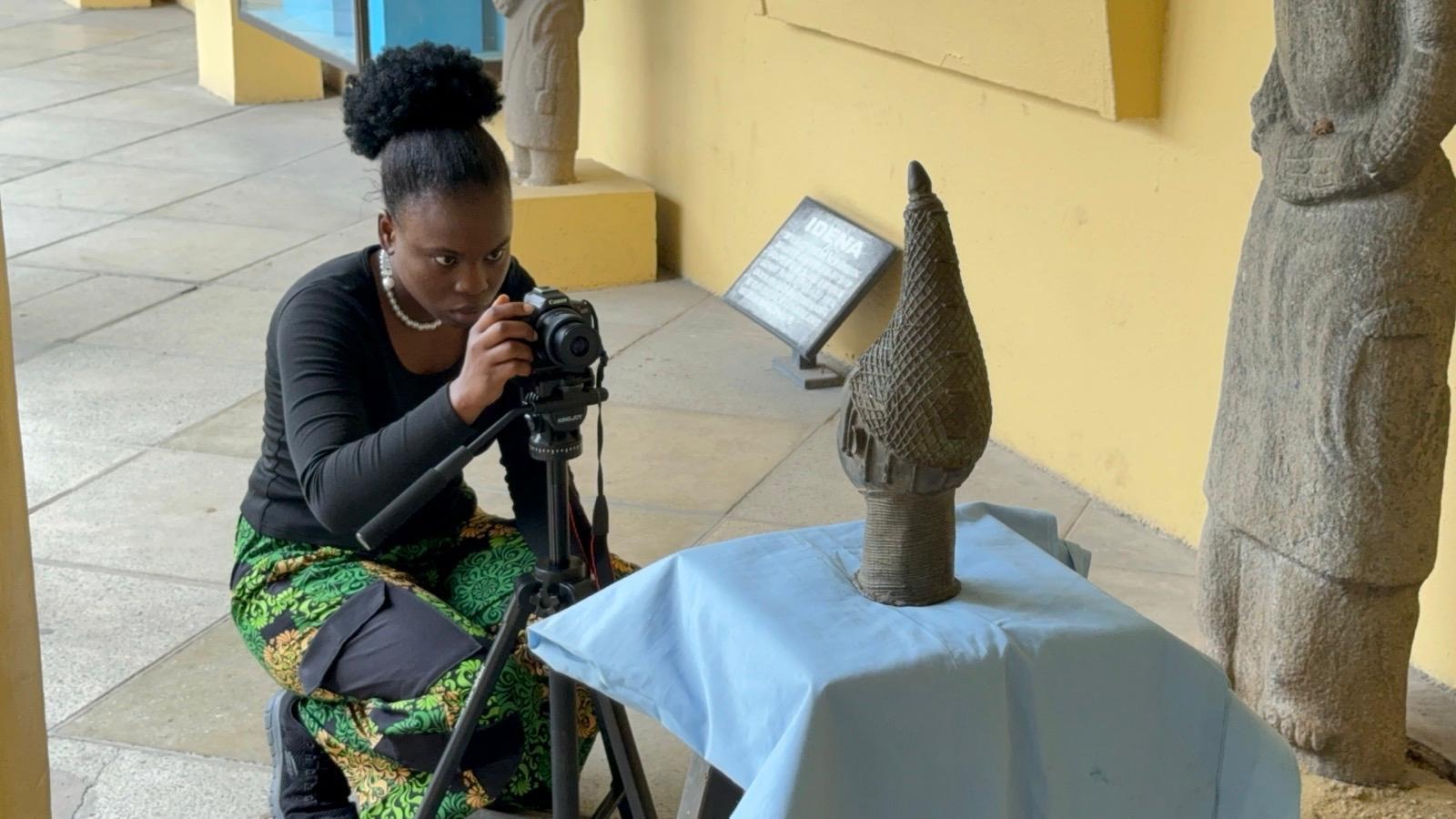
    This project has required me to gain photography and photogrammetry skills while using software applications such as Adobe Lightroom,  and RealityCapture. Through this project, I also aim to create a VR and AR experience to tell digital stories for Black diasporic audiences to reconnect with their African roots. 

    This is a video of a Ife Art that I created using photogrammetry, which is a practice that uses measurements to convert pictures into 3D dimensional representations. Ife Art represents one of the most popular canons of Nigerian civilization before colonialism. 

    Through various digital humanities workshops and a mini-grant from the African American Digital and Experimental Humanities (AADHum), I have been able to build visually responsive websites using HTML, JavaScript, CSS, and Twine to evaluate how digital forms reinforce intellectual arguments. I also taught the Introduction to Digital Studies class at the University of Maryland, which required me to teach students how to critically analyze digital tools and make their own projects in the process. 
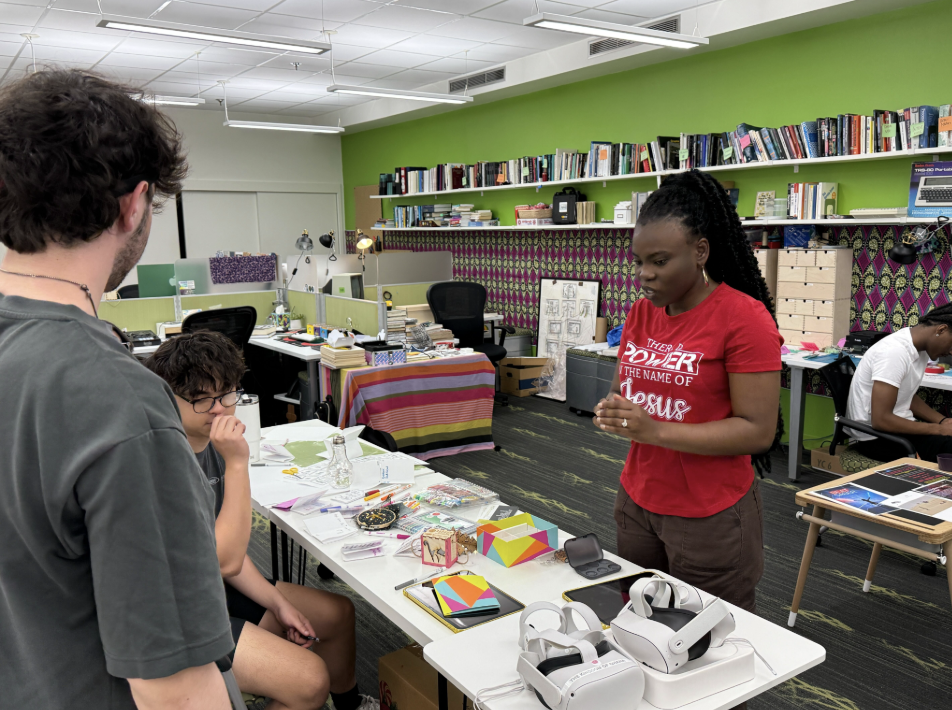
    Here’s an image from one of the workshops with my students at the Maryland Institute for Technology in the Humanities at the University of Maryland (MITH). 

    I specialize in the Language, Writing, and Rhetoric track at UMD. My research explores the intersection of culture, technology, and public memory, with a commitment to amplifying African voices and perspectives within digital conversations. I am also a research assistant for the Maryland Study of Writing on GenAI, Language Diversity, and Student Writing. 
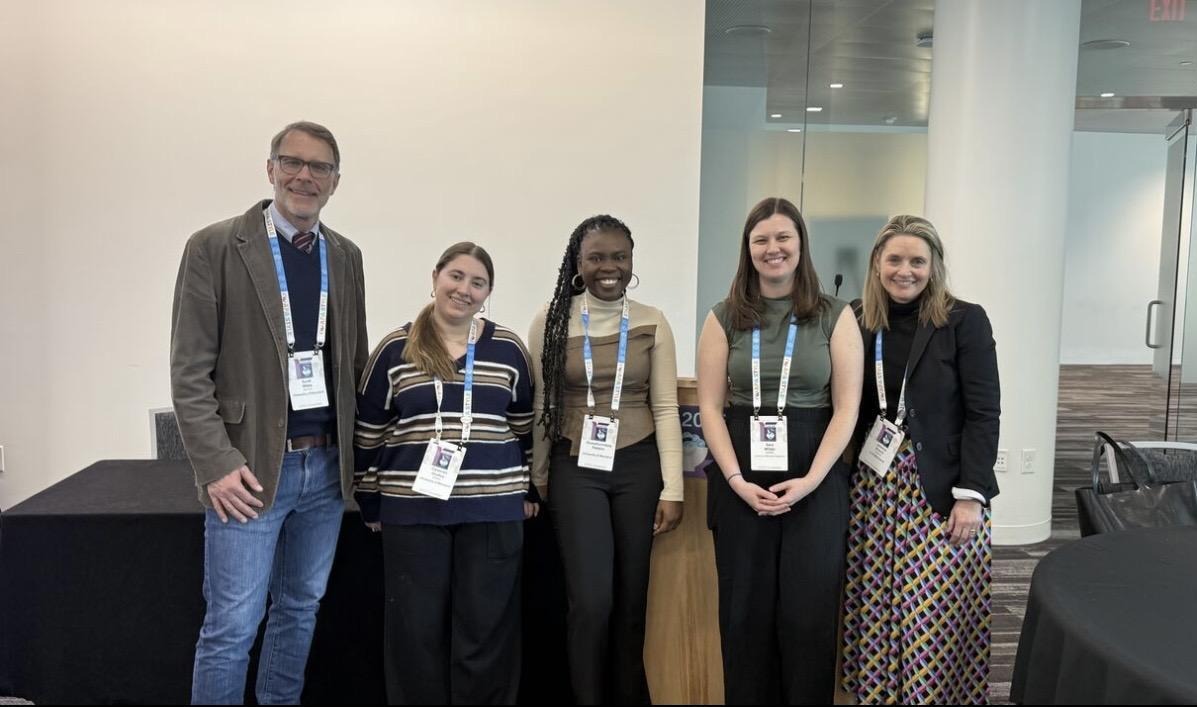
    With the Maryland writing directors and research team at the CCCC conference in 2025 to present preliminary results on the research work. 

    I am also a Center for Writing and Oral Communication Fellow with the University of Maryland’s graduate school. Prior to graduate school, I worked as a professional writer for software companies across the blockchain, AI, B2B, and eCommerce industries. My commitment to projecting African and transnational sensibilities within digital spaces serves as the basis of my academic inquiry, an experience I am eager to explore as a returning DRC fellow. 
    Author

    • Funmilola Fadairo

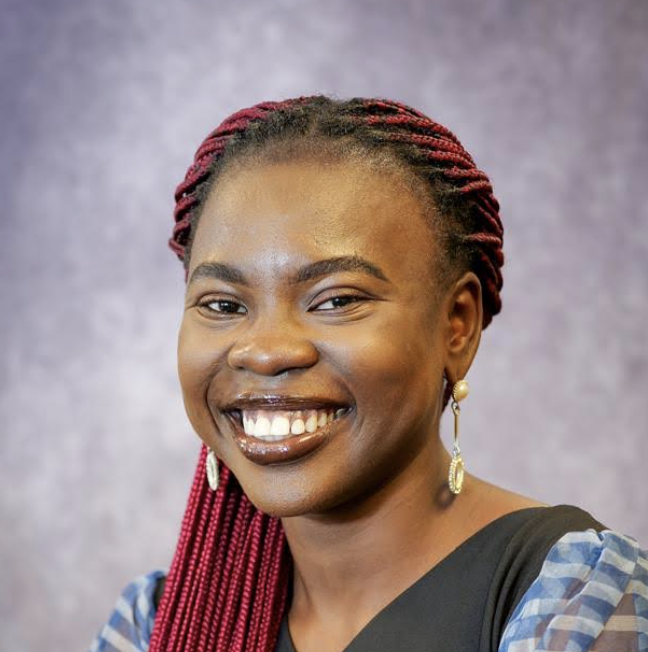
      Funmilola Fadairo is a PhD student in the Language, Writing, and Rhetoric track within the English Department at the University of Maryland. Her research explores how technological and multimodal forms depict African sensibilities across time.

      View all posts
    Leave A Reply Cancel Reply

    Recent Posts
    By Funmilola FadairoOctober 30, 20260

    Reintroduction to Funmilola Fadairo

    By Ali Alalem, Thais Rodrigues Cons, Nicole K. Golden, Erin Miller, Mehdi Mohammadi and Funmilola FadairoSeptember 8, 20260

    DRC Fellows End of Year Reflection

    By Mehdi MohammadiAugust 31, 20260

    Toward a Post-Temporal Time-Consciousness in GenAI-Mediated Writing

    By Erin MillerAugust 17, 20260

    Flock vs. DeFlock: The Constitutive Limits of Community

    By Funmilola FadairoAugust 16, 20261

    “I Am a Living UNESCO Site”: When AI Flattens Culture with Dr. Cana Itchuaqiyaq

    Digital Rhetoric Collaborative | Gayle Morris Sweetland Center for Writing | University of Michigan

    Type above and press Enter to search. Press Esc to cancel.