
Close Menu
    Facebook X (Twitter) Instagram
    Recent Posts
    • CCCC 2026 Session Review: EA.5 Navigating Algorithmic Literacy Practices among Digital Feminists and Activists in the Global South
    • CCCC 2026 Session Review: CA.3 Developing AI Literacy in Composition Courses
    • CCCC 2026 Session Review: D.6 Food Studies in Rhetoric and Writing: Taking Stock of Our Next Steps
    • Starting with Voice: How Language Awareness Shapes Multimodal Composing
    • From Studio Remixing to Classroom Remixing: How Research Posters Can Teach Semiotic Border-Crossing for Social Justice
    • Multimodal, Multilingual Praxis in the First Year Composition Classroom: Reflections on Promoting Social and Linguistic Justice Via Rhetorical Translation
    • Against Linguistic Flattening: Translingual Multimodality in the Age of AI
    • When the Teacher Stops Talking: A Human-Centered Experiment with Classroom Silence
    RSS Facebook X (Twitter) Instagram
    Digital Rhetoric Collaborative
    • Home
    • Conversations
      • Blog Carnivals
      • DRC Talk Series
      • Hack & Yack
      • DRC Wiki
    • Reviews
      • CCCC Reviews
        • 2026 CCCC Reviews
        • 2023 CCCC Reviews
        • 2022 CCCC Reviews
        • 2021 CCCC Reviews
        • 2019 CCCC Reviews
      • C&W Reviews
        • 2025 C&W Reviews
        • 2022 C&W Reviews
        • 2019 C&W Reviews
        • 2018 C&W Reviews
        • 2017 C&W Reviews
        • 2016 C&W Reviews
        • 2015 C&W Reviews
        • 2014 C&W Reviews
        • 2013 C&W Reviews
        • 2012 C&W Reviews
      • MLA Reviews
        • 2019 MLA Reviews
        • 2014 MLA Reviews
        • 2013 MLA Reviews
      • Other Reviews
        • 2018 Watson Reviews
        • 2017 Feminisms & Rhetorics
        • 2017 GPACW
        • 2016 Watson Reviews
        • 2015 IDRS Reviews
      • Webtext of the Month
    • Teaching Materials
      • Syllabus Repository
      • Teaching & Learning Materials (TLM) Collection
    • Books
      • On Visual Rhetoric
      • Memetic Rhetorics
      • Beyond the Makerspace
      • Video Scholarship and Screen Composing
      • 100 Years of New Media Pedagogy
      • Writing Workflows
      • Rhetorical Code Studies
      • Developing Writers in Higher Education
      • Sites of Translation
      • Rhizcomics
      • Making Space
      • Digital Samaritans
      • DRC Book Prize
      • Submit a Book Proposal
    • DRC Fellow Projects
    • About
      • Advisory Board
      • Graduate Fellows
      • DRC Fellows Application
    Digital Rhetoric Collaborative

    Wrap Up: Makerspaces and Composition Practices Blog Carnival

    0
    By Paula M Miller on April 20, 2016 Blog Carnival 8

    Sheridan notes that “[c]omposers are embedded within the networks of tools, raw materials, spaces, media, and people; these networks profoundly shape rhetorical practices.” In the Makerspaces and Composition Practices blog carnival, we’ve seen scholars explore all the ways that material objects shape rhetorical composing, from makerspaces from a variety of angles, from [example]to [example]to [example]. We also had a great conversation on Twitter.
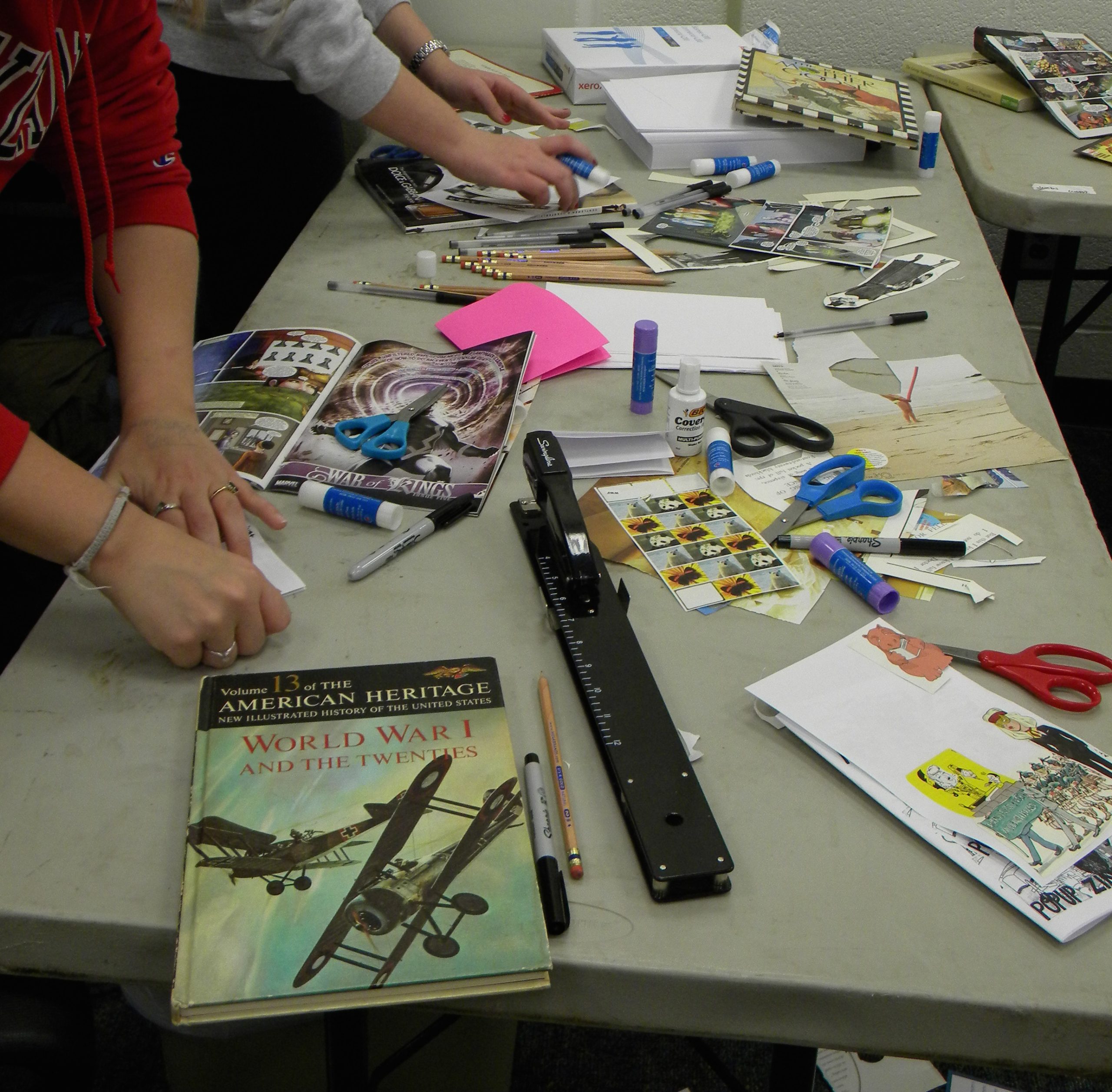
    Zines in the making, University of Maryland, 2012
    Zines in the making, University of Maryland, 2012

    If you missed any of the posts in the series, here’s the full list of contributions in the series:

    • “Compositional Craft: Zine Workshops as Pop-Up Makerspaces” by Melissa Rogers
    • “Part 1: A Maker Mentality Toward Writing” & “Part 2: Doorknob Hanger: A Case Study in Making Rhetoric” by David Sheridan
    • “A Maker Project: Writing about Material Culture” by Sonia Arellano
    • “Utlilizing the Library Makerspace for Critical Invention in Intro to Science, Technology, and Society” by J.J. Sylvia IV
    • “What Can We Learn about Writing and Rhetoric from a Makerspace?” by Ann Shivers-McNair
    • “Before the Digital: What a History can Teach Educators about Makerspaces, Literacy and Rhetoric” by Krysten Manke
    • “Remaking Optophones: an Exercise in Maintenance Studies” by Tiffany Chan, Victoria Murawski, and Jentery Sayers
    • “Writing is Making: Maker Culture and Embodied Learning in the Composition Classroom” by Maggie Melo
    • “Making Across the Curriculum: DIY Culture, Makerspaces, and New Modes of Composition” by Jessica Elam-Handloff
    • “Precarious Deliberation and Failing Faster: The Value of Glitch in Mutlimodal Public Writing Assignments” by Stephanie Larson

    How does making inform your writing practice? Talk back in the comments?

    Author

    • Paula M Miller
      Paula M Miller

      Paula is a PhD graduate fellow at The Ohio State University studying rhetoric, composition, and literacy. Her research interests lie at the intersection of writing centers and multiliteracies. You can visit her online at paula-miller.com

      View all posts
    Leave A Reply Cancel Reply

    Recent Posts
    By Nicole K. GoldenApril 12, 20260

    CCCC 2026 Session Review: EA.5 Navigating Algorithmic Literacy Practices among Digital Feminists and Activists in the Global South

    By Ezinne OkonkwoApril 11, 20260

    CCCC 2026 Session Review: CA.3 Developing AI Literacy in Composition Courses

    By Ashley M. BeardsleyApril 10, 20260

    CCCC 2026 Session Review: D.6 Food Studies in Rhetoric and Writing: Taking Stock of Our Next Steps

    By Shelby RamseyApril 9, 20260

    Starting with Voice: How Language Awareness Shapes Multimodal Composing

    By Gideon Kwashie KwawukumeyApril 8, 20260

    From Studio Remixing to Classroom Remixing: How Research Posters Can Teach Semiotic Border-Crossing for Social Justice

    Digital Rhetoric Collaborative | Gayle Morris Sweetland Center for Writing | University of Michigan

    Type above and press Enter to search. Press Esc to cancel.