
Close Menu
    Facebook X (Twitter) Instagram
    Recent Posts
    • “I Am a Living UNESCO Site”: When AI Flattens Culture with Dr. Cana Itchuaqiyaq
    • A Battle of Narratives: Community Resistance to the Material Costs of AI with Dr. Dustin Edwards
    • Collaborative Podcasting for Social Justice in Composition Classrooms
    • 2026 C&W Session Review: Session G: Sustaining Programmatic Assessment: The Role of Digital Praxis and Reflection
    • The Sweetland Digital Rhetoric Collaborative Interviews the editors of Computers and Composition
    • [Utopia]-in-the-loop in an Emergent Age of Full Automation
    • Ghosts-in-the-Loop: Bormann’s Ghost v. AI
    • Relational-in-the-Loop Writing: Reframing Rhetorical Load Sharing as a Rhetorical Assemblage
    RSS Facebook X (Twitter) Instagram
    Digital Rhetoric Collaborative
    • Home
    • Conversations
      • Blog Carnivals
      • DRC Talk Series
      • Hack & Yack
      • DRC Wiki
    • Reviews
      • CCCC Reviews
        • 2026 CCCC Reviews
        • 2023 CCCC Reviews
        • 2022 CCCC Reviews
        • 2021 CCCC Reviews
        • 2019 CCCC Reviews
      • C&W Reviews
        • 2025 C&W Reviews
        • 2022 C&W Reviews
        • 2019 C&W Reviews
        • 2018 C&W Reviews
        • 2017 C&W Reviews
        • 2016 C&W Reviews
        • 2015 C&W Reviews
        • 2014 C&W Reviews
        • 2013 C&W Reviews
        • 2012 C&W Reviews
      • MLA Reviews
        • 2019 MLA Reviews
        • 2014 MLA Reviews
        • 2013 MLA Reviews
      • Other Reviews
        • 2018 Watson Reviews
        • 2017 Feminisms & Rhetorics
        • 2017 GPACW
        • 2016 Watson Reviews
        • 2015 IDRS Reviews
      • Webtext of the Month
    • Teaching Materials
      • Syllabus Repository
      • Teaching & Learning Materials (TLM) Collection
    • Books
      • On Visual Rhetoric
      • Memetic Rhetorics
      • Beyond the Makerspace
      • Video Scholarship and Screen Composing
      • 100 Years of New Media Pedagogy
      • Writing Workflows
      • Rhetorical Code Studies
      • Developing Writers in Higher Education
      • Sites of Translation
      • Rhizcomics
      • Making Space
      • Digital Samaritans
      • DRC Book Prize
      • Submit a Book Proposal
    • DRC Fellow Projects
    • About
      • Advisory Board
      • Graduate Fellows
      • 2026-2027 DRC Fellows Application
    Digital Rhetoric Collaborative

    “I Am a Living UNESCO Site”: When AI Flattens Culture with Dr. Cana Itchuaqiyaq

    0
    By Funmilola Fadairo on August 16, 2026 Interviews, DRC Talk Series, Conversations

    Dr. Itchuaqiyaq is an Associate Professor of Technical and Scientific Communication and the Founding Director of the Center for Sustainable Engagement in the Arctic at Virginia Tech University.

    She argues that technologies can lead us to outsource our thinking while emphasizing the importance of prioritizing our own reasoning, valuing physical interactions, and investing in analog practices to achieve sustainability at the individual level. As an Inupiaq scholar, she shares examples that illustrate the potential loss and flattening of cultural knowledge when AI systems homogenize distinct cultural practices. She also points out that language data has become a valuable commodity and critiques Big Tech companies’ seemingly altruistic efforts, arguing that they often seek to profit from rare linguistic resources particularly low-resource languages such as Inupiaq spoken by her community, the Noorvik Native Community in Northwest Alaska. If tech companies are willing to move beyond merely seeking profit off rare languages, Dr. Itchuaqiyaq provides recommendations of language revitalization programs that can make a real intergenerational impact.
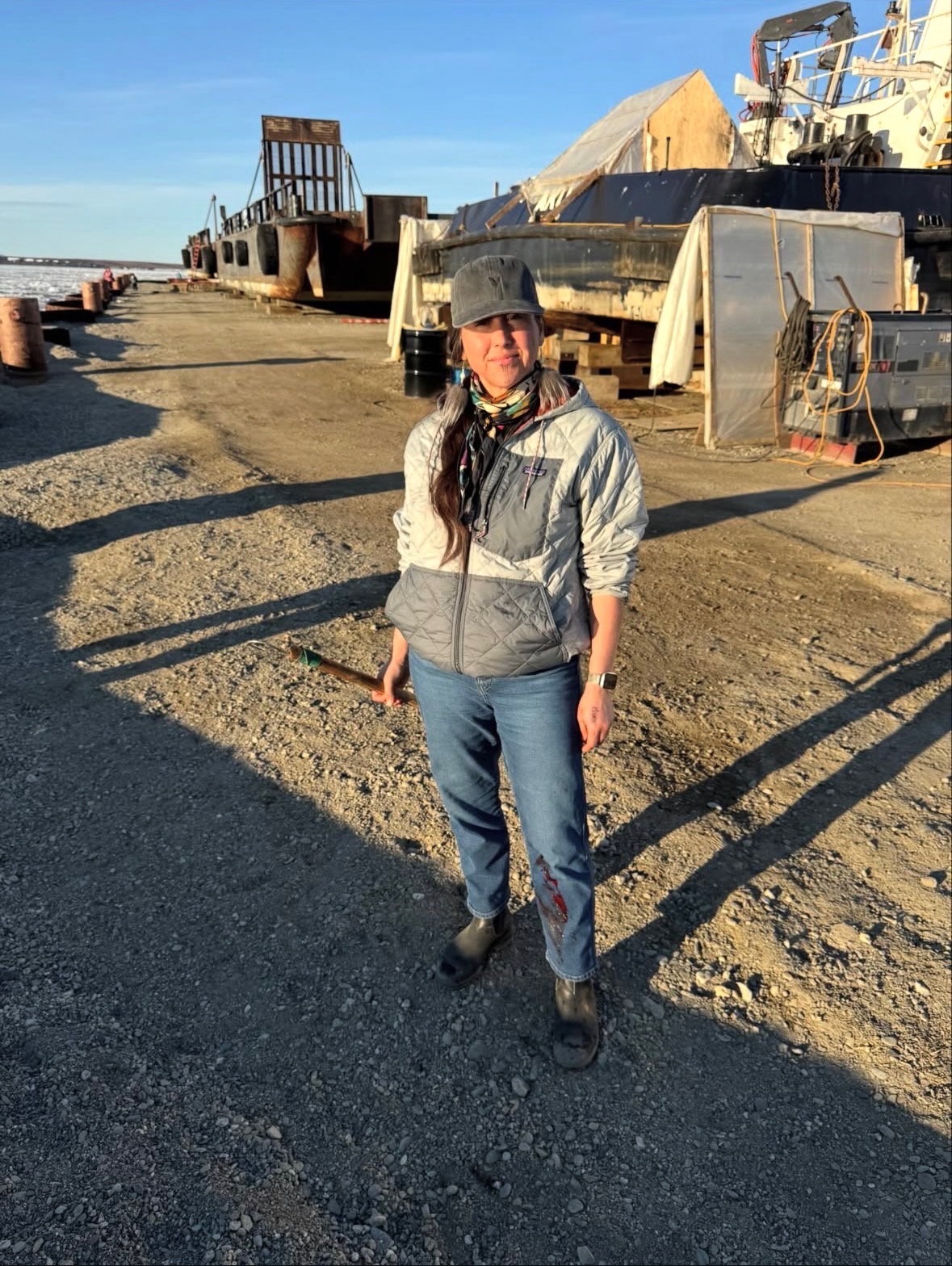
    Dr. Itchuaqiyaq participating in sustenance

    In this interview, she offers a nuanced perspective that identifies the capitalist forces driving the accelerated growth of AI technologies while also recognizing the need for tribal communities to access these technologies to compensate for the training and resources they may lack in effectively communicating their ideas. She also draws important connections between writing and class, noting that a person’s ability to communicate effectively is closely tied to how they are perceived.

    Download interview transcript here.
    Author

    • Funmilola Fadairo

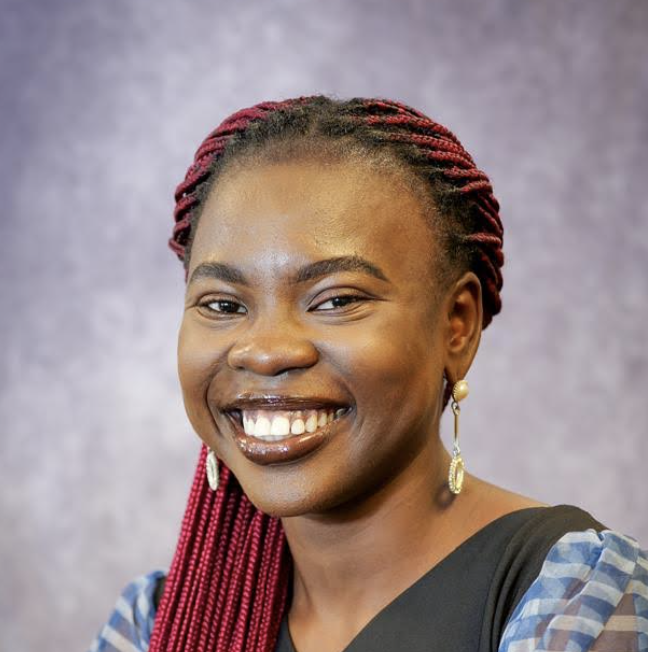
      Funmilola Fadairo is a PhD student in the Language, Writing, and Rhetoric track within the English Department at the University of Maryland. Her research explores how technological and multimodal forms depict African sensibilities across time.

      View all posts
    Leave A Reply Cancel Reply

    Recent Posts
    By Funmilola FadairoAugust 16, 20260

    “I Am a Living UNESCO Site”: When AI Flattens Culture with Dr. Cana Itchuaqiyaq

    By Funmilola FadairoJuly 29, 20260

    A Battle of Narratives: Community Resistance to the Material Costs of AI with Dr. Dustin Edwards

    By Ali Alalem and Nicole K. GoldenJuly 23, 20260

    Collaborative Podcasting for Social Justice in Composition Classrooms

    By Sarah FischerJuly 7, 20260

    2026 C&W Session Review: Session G: Sustaining Programmatic Assessment: The Role of Digital Praxis and Reflection

    By Alyse CampbellJune 25, 20260

    The Sweetland Digital Rhetoric Collaborative Interviews the editors of Computers and Composition

    Digital Rhetoric Collaborative | Gayle Morris Sweetland Center for Writing | University of Michigan

    Type above and press Enter to search. Press Esc to cancel.